






Archives For loans

Home » loans

By Angelo Marasigan, HOPE supporter 

I spent the first 25 years of my life in the Philippines, where limited job opportunities push many people to start their own small businesses to provide for their families.  

But access to business loans—and the chance to make a living—often comes at a high cost. 

In the Philippines, and many other communities around the world, predatory lending is common. With little to no other options available to grow their businesses, many entrepreneurs must borrow at soaring rates of 20% interest per week or more. I’ve seen it up close. I met a lady this past February who was paying 120% annual interest on her loan just to keep her business. 

But for some, the cost can be much more devastating. Someone close to my family once borrowed money the same way. After a while, she got deeper and deeper into debt and couldn’t pay. One day, she went missing and was never found. 

The model of borrowing money from these loan sharks is not designed to help. It’s designed to keep people in oppression.  

Another kind of lending—one meant to promote people’s wellbeing—is needed. And I’d encourage you to read the article by HOPE International’s CEO, Peter Greer, on the difference between predatory lending and HOPE’s holistic approach to microfinance that equips and empowers people.   Continue Reading…

Lina Feria never imagined that her small business selling homemade snacks could grow into a flourishing general store. Yet her story testifies that God can use small loans and persistence to transform a business and a whole family. 

Building a business brick by brick 

When Lina first decided to become a member of The Center for Community Transformation (CCT), HOPE International’s partner in the Philippines, she was selling traditional rice cake snacks (called kakanin) that she made at home. 

Although she was not a Christian then, Lina joined CCT because she was curious about their Bible studies. As she got to know staff members and read the Word, she slowly began to learn more about God and eventually gave her life to Him.   Continue Reading…

In the Dominican Republic, a batey (pronounced “bah-TAY”) is a community made up primarily of families who immigrated from Haiti to work in surrounding sugarcane fields. These underserved communities are often located hours away from the nearest city. As immigrants, many families living in bateyes lack the necessary legal status to receive financial services, education, or medical services.

When Esperanza, HOPE’s microfinance partner in the Dominican Republic, first arrived in Batey Margarita in 2006, Jacobo Benjamin was the first of his neighbors to take out a loan. Previously, Jacobo had worked in the nearby sugarcane fields, cutting and processing the crop. But when the processing company announced it was closing, Jacobo knew he’d need to find a new source of income.

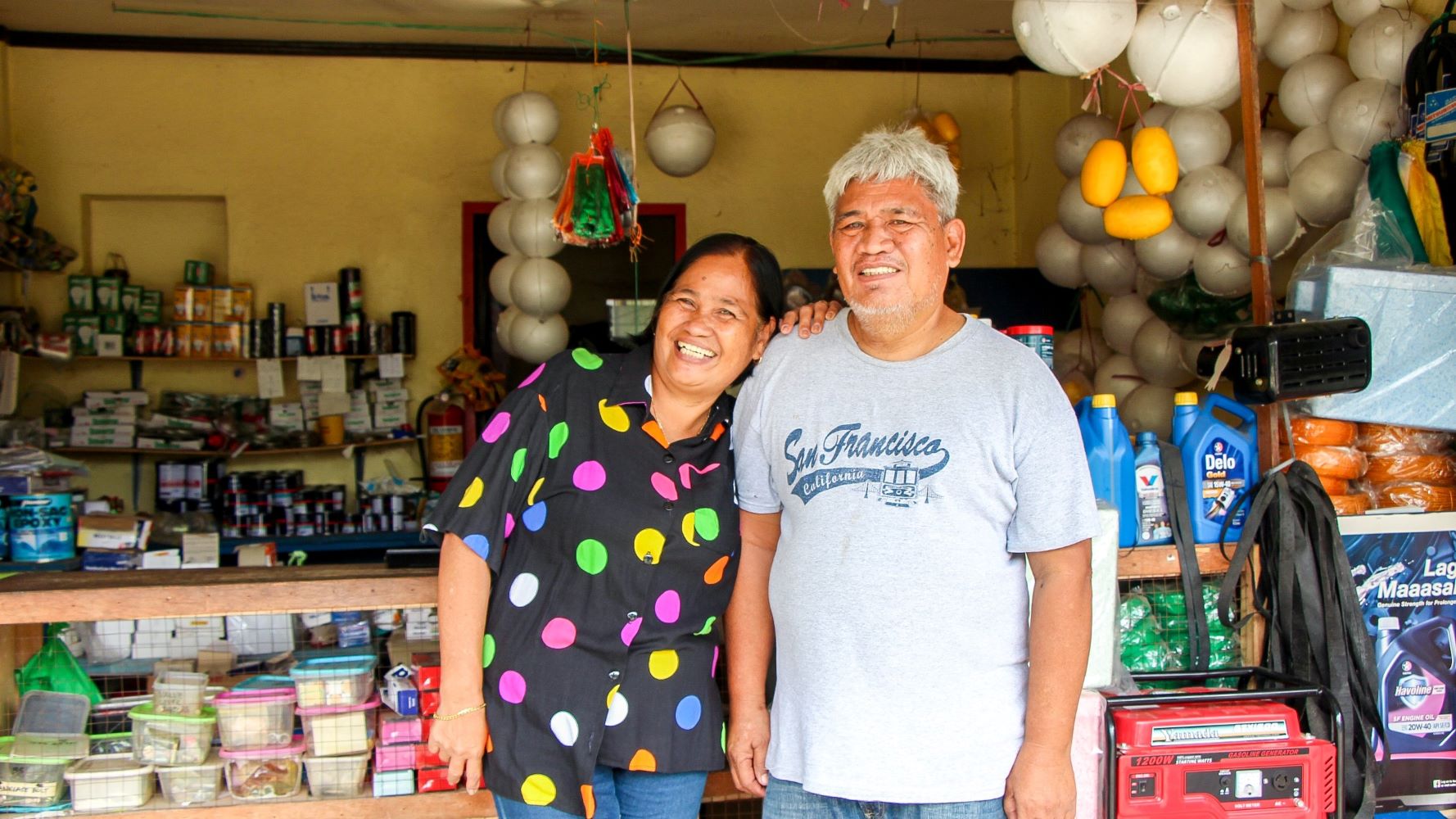
With his loan from Esperanza, Jacobo opened a colmado, or corner store, allowing him to provide for his family and meet a key need for his neighbors.

Continue Reading…

Jean Claude Kubwayo knew that goats would be a wise investment.

In rural Burundian communities like Jean Claude’s, goats and other livestock can provide a regular supply of meat, milk, and manure for crops. Animal products add nutritional and caloric value to a family’s diet, so simply owning livestock can improve a family’s overall health. Continue Reading…

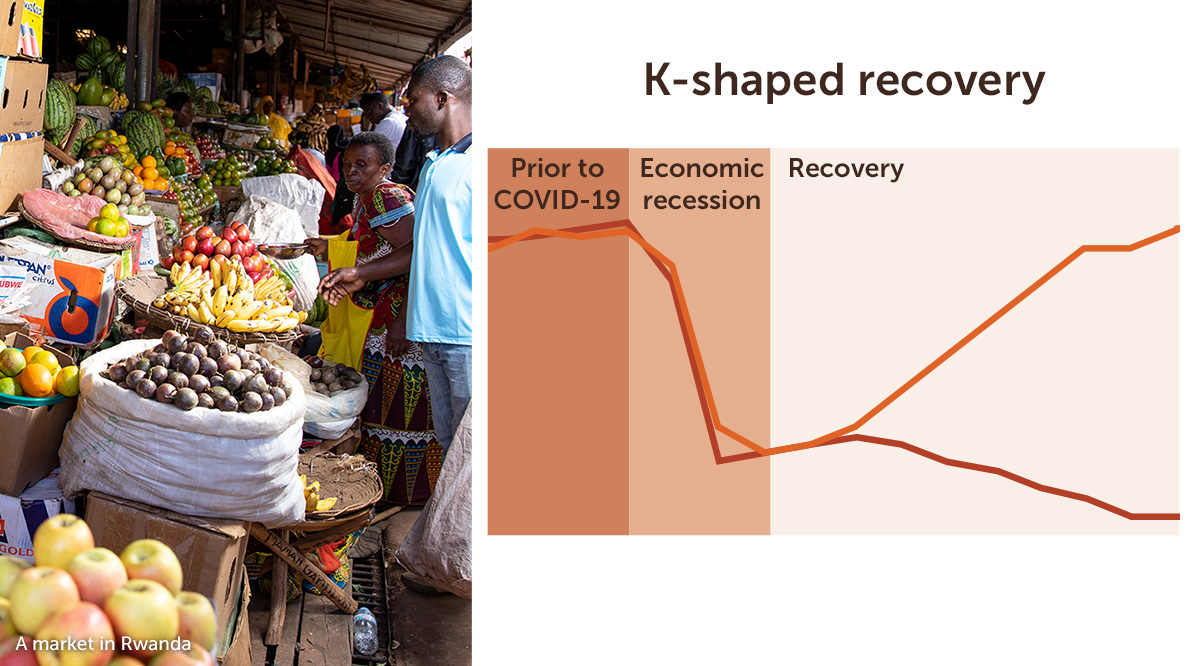
K-shaped recovery

The United States is currently experiencing what economists are calling a K-shaped recovery. This occurs when, following a widespread and significant economic dip, certain portions of the economy begin to move toward economic recovery, while others stagnate or fall even further. A K-shaped graph helps explain why recovery following the pandemic seems to be occurring unevenly—while some industries (and people) are returning to normal or even improving, others are experiencing the very opposite.

This phenomenon seems to be occurring globally, as well.

Continue Reading…

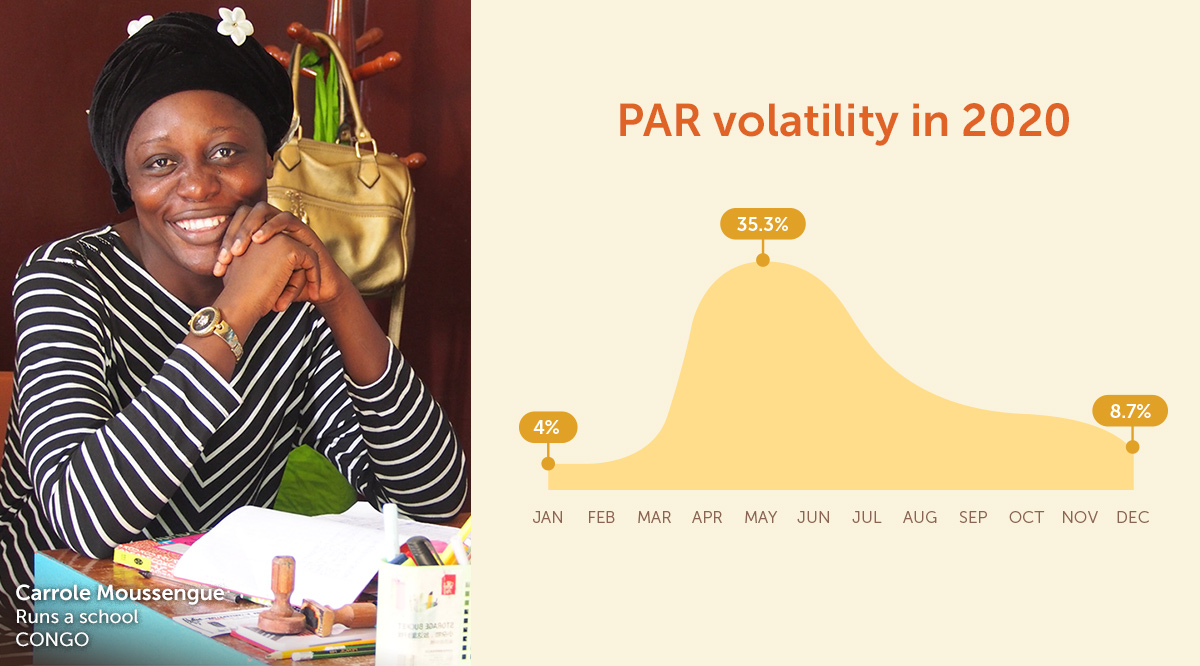
Carrole Moussengue

2020 was the most challenging year in HOPE International’s 23-year history. Although we felt the strain of the pandemic on HOPE’s operations, the hardest part was witnessing many of the men and women we serve endure illness, loss of life, overwhelmed health care systems, shortages, halted businesses, and falling income.

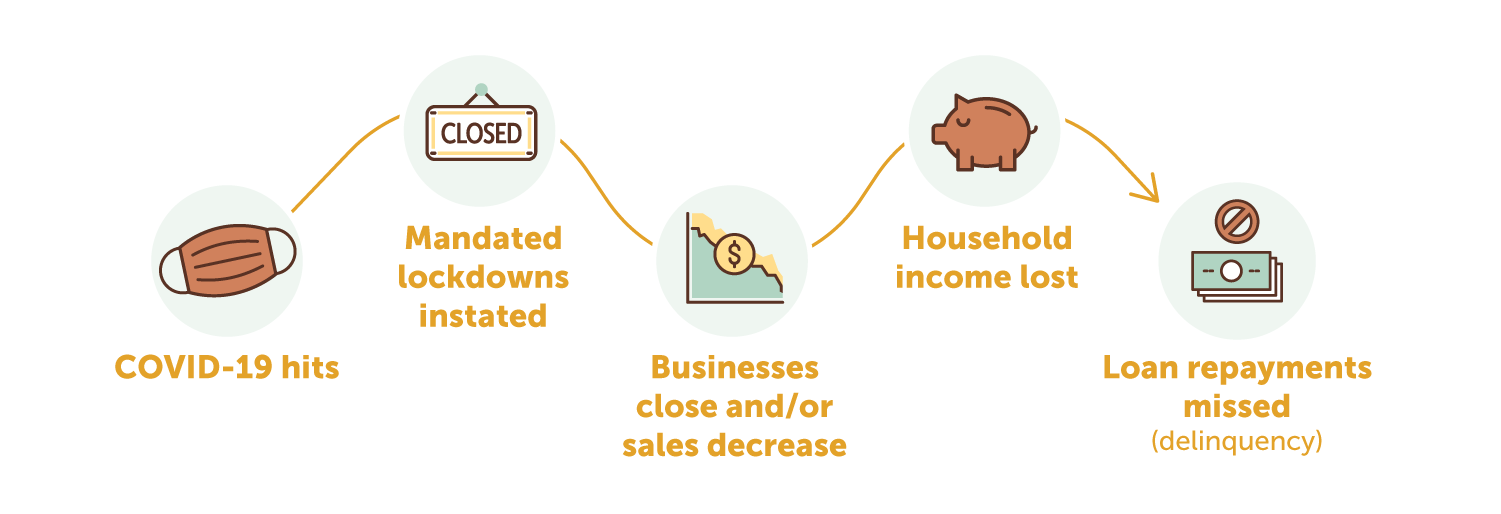
Microfinance institutions (MFIs) across the HOPE network rallied to assist struggling entrepreneurs, but with markets closed and commerce grinding to a halt, the outlook was grim for both MFIs and those we serve. We began to see a chain reaction play out across our network’s operations:

COVID-19 hits, mandated lockdowns instated, businesses close and/or sales decrease, household income lost, loan repayments missed

But today, we’re excited to report that we’re seeing encouraging signs of recovery in HOPE-network microfinance institutions. We celebrate these because they indicate not only that our operations are returning to health but—even more importantly—that the families we serve are seeing their lives stabilize. Thanks be to God! Continue Reading…